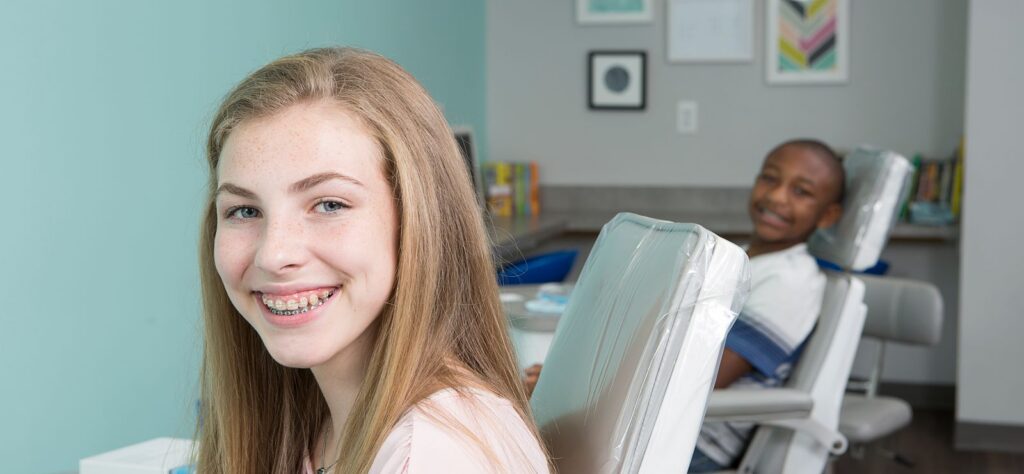
Getting braces is an exciting step toward a healthier, more confident smile, but it also comes with a few temporary adjustments, especially when it comes to eating.
During your first day and week with braces, it’s completely normal for your mouth to feel tender as everything settles in.
Whether today is your first day with braces or you’re preparing for an upcoming visit to our orthodontic office in Gardendale or Alabaster, we’re here to help you adjust!
Let’s walk through what to eat (and what to avoid) during your first week so you can stay comfortable, protect your braces, and feel confident as your smile transformation begins.
TL;DR: Eating with Braces – Do’s & Don’ts
- Some soreness during your first week with braces is completely normal and temporary.
- Stick to soft, easy-to-chew foods at first to stay comfortable and protect your brackets.
- Avoid hard, sticky, crunchy, or overly chewy foods, especially during the first week.
- As tenderness fades, you can gradually return to more foods by taking smaller bites and chewing carefully.
- Can’t bear the thought of food restrictions? Clear aligners don’t require any food restrictions!
Why are braces sore at first?
It’s completely normal to feel soreness or sensitivity during your first few days with braces. This early discomfort is simply your teeth, gums, and surrounding bone responding to something new.
Here’s what’s happening: Braces work by applying gentle, steady pressure to guide your teeth into healthier alignment. Even though that pressure is carefully controlled, your mouth needs a little time to adjust.
As your teeth begin to move, the surrounding tissues can feel tender or achy, especially when chewing.
The good news? This phase is temporary! Most patients notice the soreness fading within about one to two weeks, with the first few days being the most noticeable.
Choosing the right foods during this adjustment period can make a big difference in staying comfortable while your smile gets to work.
What to Eat with Braces the First Week
If you’re preparing for braces and wondering, “What can I eat the first day with braces?” We’ve got your back!
The key during your first week with braces is choosing foods that are soft, gentle, and easy to chew while your mouth adjusts.
Stick with foods that don’t require much pressure or biting. These options help minimize discomfort and protect your brackets and wires as everything settles in:
- Smoothies (skip the seeds)
- Oatmeal or cream of wheat
- Applesauce
- Yogurt
- Soft noodles or pasta
- Soup (lukewarm, not hot!)
- Mashed potatoes
- Soft fruits, like bananas or ripe berries
- Jell-O or pudding
You can also combine braces-friendly foods to keep things interesting. Think yogurt mixed with soft berries and honey, or a protein-packed smoothie for an easy meal on day one.
What NOT to Eat with Braces the First Week
During your first week with braces, it’s best to avoid foods that are hard, crunchy, sticky, or overly chewy. These can increase soreness, bend wires, or damage brackets, especially while your mouth is still adjusting.
We offer custom 3D-printed KLOwen™ braces that are designed to reduce incidents of broken brackets. However, no type of braces is completely indestructible, so it’s still best to avoid the particularly damaging snacks throughout treatment.
Here are the most important foods to avoid during your first week with braces:
- Hard foods, like nuts, ice, hard pretzels, and hard candy
- Sticky or gummy foods, including gum, caramel, taffy, fruit snacks, and gummy candy
- Crunchy chips, especially kettle chips or thick tortilla chips
- Popcorn (kernels are a common cause of broken brackets)
- Crusty or chewy breads, such as bagels, baguettes, or pizza crust ends
- Whole, hard fruits or vegetables, like apples or carrots (slice or dice them instead)
- Tough or chewy meats, including beef jerky
- Sticky nut butters, like thick peanut or almond butter (especially during the first few days
As soreness improves and your braces start to feel more comfortable, you’ll be able to enjoy more foods again, just with a little extra care and smaller bites.
Common Questions About Eating with Braces
Q: How long after getting braces can you eat normal or solid foods?
A: Returning to a normal diet can take a week or two on average. Some patients may become used to the sensation in a couple of days, while others may prefer a week of softer foods. When you return to a normal diet, it’s important that you still eat braces-friendly foods to avoid damaging your appliances.
Q: Besides eating soft foods, is there anything else I can do about the soreness?
A: You can take an over-the-counter pain reliever, like Tylenol, to help ease the discomfort.
You can also do a warm salt water rinse by mixing one cup of warm water with one teaspoon of salt, gargling the solution and repeating 2 to 3 times a day.
Check out the AAO’s guide to managing orthodontic discomfort for more ideas!
Q: Can you eat pizza and burgers with braces?
A: Yes, you can still enjoy pizza and burgers with braces, especially after the first few days. The key is choosing softer options and eating them carefully.
For pizza, avoid thick or crunchy crusts and hard toppings. Softer crusts and well-cooked toppings are easier on your braces. With burgers, skip anything overly tough or crunchy and consider cutting your burger into smaller pieces instead of biting straight into it.
Taking smaller bites and chewing slowly can help protect your brackets and keep you comfortable while you adjust.
Q: What sweets can you eat with braces?
A: If you have a sweet tooth and your #1 concern is, “can I eat ice cream with braces?” – you’ll be happy to know that YES, you can absolutely eat ice cream with braces! Just avoid hard, crunchy toppings, like nuts and hard candy toppings.
Here’s a list of tasty sweets you can eat with braces:
- Chocolate
- Soft cookies
- Frozen yogurt (without hard toppings)
- Ice cream (without hard toppings)
- Soft candies
- Pies (without hard crust)
- Pudding
- Cakes
- Cupcakes
- Bite-sized pieces of fruit
There aren’t too many sweet treats that are off-limits with braces.
Q: Is there any type of braces that doesn’t come with dietary restrictions?
A: If you’re a certified foodie and can’t bear the thought of taking a short hiatus from your favorite foods, clear aligners may be a better fit for you!
Clear aligners can be removed before eating and drinking, which means all of your favorite foods are still on the table throughout your treatment.
Eating with Braces Doesn’t Have to be Hard!
Your team at Canales Orthodontics in Alabaster and Gardendale is here to support you as you adjust to life with braces, from your first week with braces through the moment your beautiful new smile is revealed.
Please don’t hesitate to reach out to us with any questions. You can call or text us anytime!
If you haven’t scheduled a complimentary consultation for you or your child yet, let’s get started! You can also meet us from home first with a virtual consultation.
We’re proud to be a board-certified orthodontist for kids, teens, and adults in Gardendale and Alabaster.